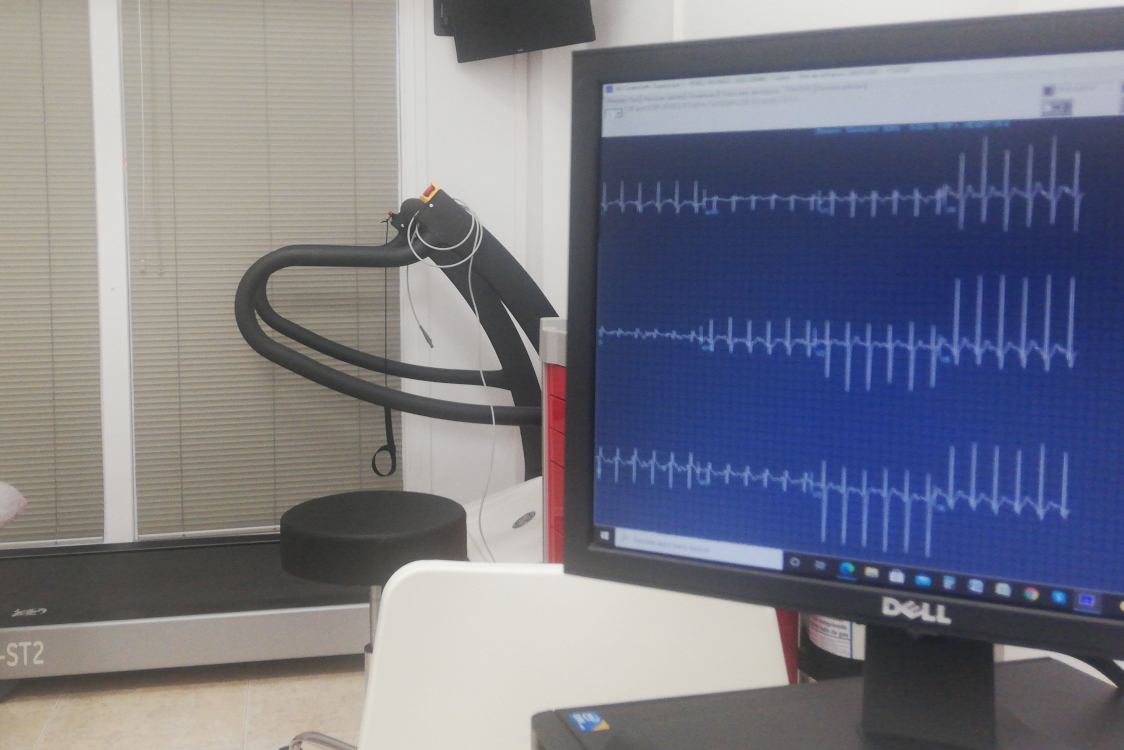
Basically, it consists of the graphic recording of the electrical activity of the heart collected on the surface of the skin while the patient performs physical exercise. It is also called ergometry or stress electrocardiogram. Since there are electrical alterations in the heart that are only triggered by a stress situation, the main purpose of the stress test is to detect the changes that occur in the electrocardiogram while the patient performs physical exercise.
What is the stress test used for?:
It is mainly used to diagnose or assess coronary artery disease. It is also useful in cases of arrhythmias that appear with exercise. Although less frequently, it is also used in the assessment of other heart diseases.
How is it done?:
This is a simple procedure for which the patient does not need any prior preparation. The only thing recommended is that the patient does not eat a large meal before the test. He or she should also avoid certain substances, such as coffee, tea, fizzy drinks, chocolate, and painkillers. In addition, the doctor should tell the patient if he or she needs to stop taking any of the medications he or she usually takes before the test.
In the stress test room, the patient is lying on a table and is lightly rubbed on various areas of the chest, abdomen and sometimes the back. Adhesive patches are placed on the area, which act as electrodes. These electrodes, via their corresponding cables, transmit electricity from the surface of the body to a special device, where the recording can be displayed on a screen or printed out on paper. The patient is also fitted with a blood pressure cuff around one of his arms to measure his blood pressure during the test.
You will then be asked to walk on a treadmill or pedal a stationary bicycle. Every 2 to 3 minutes, the speed and incline of the treadmill or the resistance of the bicycle will increase, progressively intensifying the level of effort. Your doctor will monitor your electrocardiogram tracings and blood pressure, looking for abnormalities, especially those that indicate that your heart is not getting enough oxygen. After the exercise, you will be asked to lie down or sit and rest, while you continue to be monitored for post-exertion abnormalities. After the test, you may eat, drink, and resume your normal activities.
What are its benefits and risks?:
The stress test is mainly used to diagnose coronary artery disease. When there is an obstruction of one or more coronary arteries, the disproportion between the reduced blood flow and the increased demand on the myocardium due to exercise is manifested by characteristic alterations in the electrocardiogram. Some patients present exercise-induced arrhythmias, so the stress test is useful to trigger and study them.
Basically, a stress test is recommended for all people with symptoms that suggest the presence of coronary artery disease, especially those who report chest pain. It is also indicated in the routine evaluation of patients with chronic coronary artery disease. The stress test has a very low risk of complications. Severe events are exceptional.
The test is usually harmless and painless. It only causes physical fatigue due to the effort. Some patients may feel chest pain due to angina, but this is often temporary and responds quickly to antianginal medication. Occasionally, slight skin irritation occurs in the area where the electrodes are placed.